
New Haven County Criminal History Checks
Begin with the record custodian, not a broad name search. New Haven police activity may appear in the official Police-to-Citizen listings, while prosecution details belong in the Connecticut Judicial Branch criminal case tools. The State Police Bureau of Identification, or SPBI, maintains the central repository. It is the proper source when a person needs to review a statewide history tied to their own identity. Connecticut has no New Haven County government, sheriff, county clerk, or county jail, despite the geographic label commonly used for the region.
Gather the full name, date of birth when lawfully available, name variants, event date, town, and any docket or report number. A unique number is far safer than a common name. Then follow the record from its source to its current stage:
- Identify the police agency and city where the event occurred.
- Check the official local activity tool or request the police report.
- Search pending cases, convictions, and the daily docket separately.
- Match names with dates, court location, charges, and docket numbers.
- Ask the proper clerk for a certified disposition when formal proof is needed.
New Haven Criminal Records Without County Government
The phrase “New Haven County” describes a familiar area, but not an operating records authority. Connecticut abolished county government. That fact changes the whole lookup route. New Haven Police handles its own local files, Waterbury and Meriden do the same, and the Judicial Branch assigns criminal matters to geographical-area and judicial-district courts. State agencies handle repository history, prison custody, probation, parole, and the registry.
A useful New Haven County criminal records search therefore moves through several offices. The NHPD report request page is the local source for police material. The Connecticut criminal case lookup supplies public docket data. SPBI handles statewide repository checks, and the Department of Correction addresses state custody. No missing “county portal” needs to be found because none exists.
NHPD Records
1 Union Avenue, New Haven, CT 06519
203-946-6312
Superior Court GA 23
121 Elm Street, New Haven, CT 06510
203-789-7461
State Police Bureau of Identification
1111 Country Club Road, Middletown, CT 06457
860-685-8480
Official Background Checks in Connecticut
SPBI is Connecticut’s central criminal-history repository. Its products are not the same as a court-name search. The legacy DPS-0846-C form identifies a $36 name-and-date-of-birth search that reports whether a record exists, a $75 name-based conviction record when one exists, and a $75 fingerprint-supported conviction history. The current process increasingly uses CCHRS pre-enrollment and purpose-specific service codes. Applicants should confirm the current product and fee before submitting.
The official SPBI information page explains the available routes. Fingerprints reduce the risk of matching the wrong person with a similar name. A repository result may also differ from a live court display due to reporting time, the scope of the product, or an erasure update.
The CCHRS portal shown in the project image is the official pre-enrollment point.
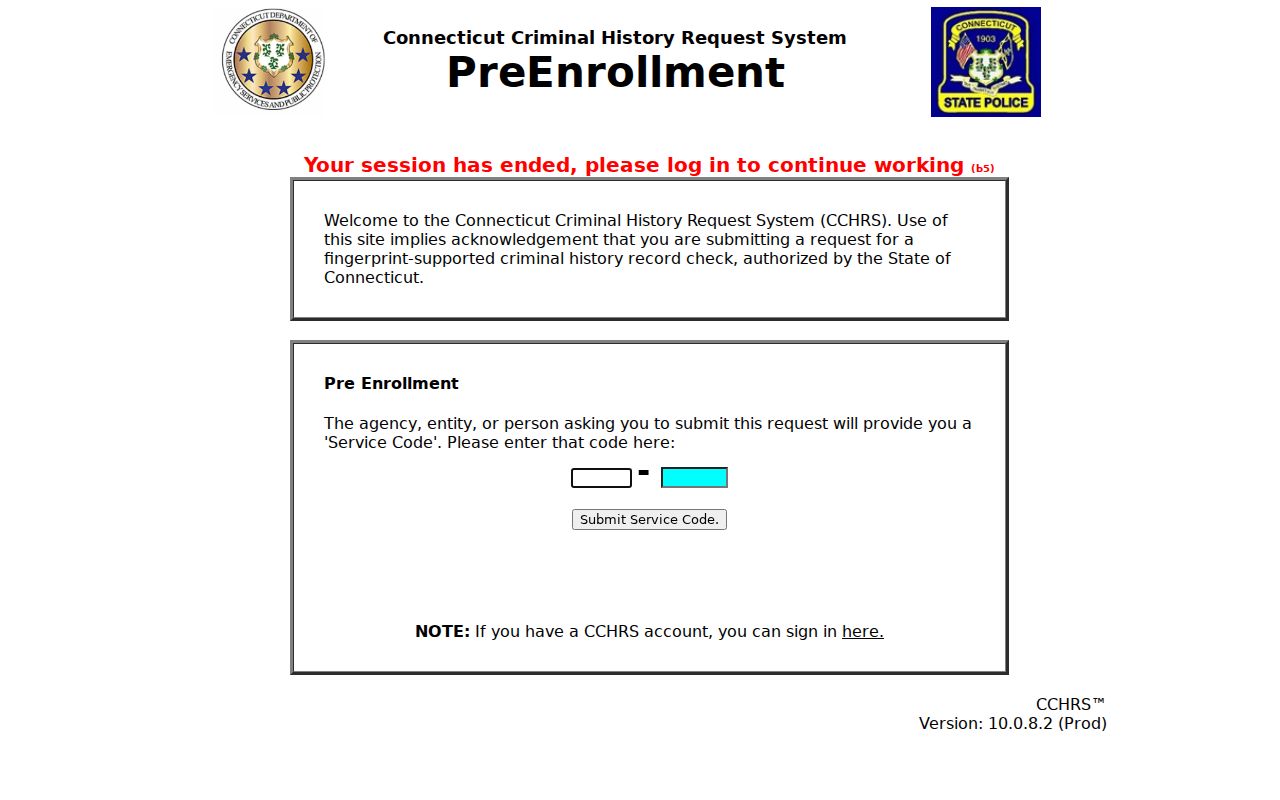
Use the service code tied to the authorized purpose rather than guessing among similarly named options.
New Haven County Court Record Searches
The Judicial Branch separates convictions, pending cases, and daily dockets. Search all three when the question calls for a full current picture. A pending search can show an open public case. A conviction search focuses on reportable conviction entries and generally displays no more than ten years online. A daily docket answers whether a matter is scheduled at a chosen court and date. None of these modes should be treated as a police narrative.
| Mode | Best key | What it answers |
|---|---|---|
| Pending case | Docket number or defendant | Whether a public criminal matter remains open |
| Conviction | Docket number or defendant | Whether the display contains a conviction record |
| Daily docket | Court, date, or defendant | Whether an appearance is scheduled |
| Warrant link | Available identifiers | Whether a publicly releasable warrant appears |
Electronic case details do not always include downloadable pleadings or a full file. Judicial Branch court-record guidance explains written searches and copies. Contact the clerk at the court holding the case for a certified outcome. New Haven GA 23 serves several surrounding towns, so “New Haven court” can describe a regional assignment rather than a city court.
Kinds of Criminal Records
New Haven County criminal history is assembled from records made at different stages. Police reports document what an agency received and investigated. Arrest records show a seizure or summons and the initial charge. Court files reflect the charge actually filed, pleas, motions, disposition, and sentence. SPBI compiles reportable state criminal-history information. DOC records concern state custody and supervision, while the registry has its own public-safety purpose.
- Police and arrest records: held by the city or state police agency that created them.
- Court records: maintained by the Connecticut Judicial Branch and the assigned clerk.
- Repository history: maintained by SPBI and best resolved by fingerprints.
- Warrants: issued through courts, with only publicly releasable entries shown online.
- Custody and supervision: divided among DOC, Judicial Branch probation, and parole authorities.
For focused help, use the Court Case Lookup, Arrest Search, or Sex Offender Lookup. An arrest is not a conviction, and a registry profile is not a complete court file.
Requesting New Haven Criminal Records
NHPD Records stores, maintains, and releases police reports and arrest records under Connecticut’s Freedom of Information Act and retention rules. Give the full names of the parties, incident date and location, incident type, report number if known, and a narrow description of the desired report or body-camera footage. Good incident keys reduce both search time and redaction cost. City FOIA remains a fallback, but the specialized police request route is the better first stop for NHPD material.
| Item | Published terms |
|---|---|
| Report copies | $0.50 per page |
| Short report by email | Ten pages or fewer may be emailed free |
| Crash report | Allow seven working days; vendor route applies to 2022 and newer |
| Complete reconstruction | $525 |
| FOIA reimbursement | First $5 waived; prepayment may be required over $10 |
A report can contain exempt or protected material, so release may require review and redaction. The city says a FOIA request may be oral or written and reduced to writing; its form is encouraged, not mandatory. Note: A police report records an allegation or investigation, not a judicial finding of guilt.
New Haven County Criminal Records: What They Contain
No single record contains every fact. Read each field in the context of its source and date. A person’s name may appear with aliases or limited identifiers. Initial arrest charges can change when prosecutors review the facts. The docket number is the strongest bridge between an online court entry and a clerk’s file.
| Name & identifiers | Name, aliases, date of birth or other identity fields allowed in that system. |
|---|---|
| Arrest data | Agency, event date, initial charge, report number, and release or bond details when public. |
| Charges & statutes | Filed offenses and Connecticut statutory citations. |
| Disposition | Pending, nolle, dismissal, acquittal, guilty plea, or conviction, subject to erasure rules. |
| Sentence | Custody, suspended time, fine, probation, or another court-ordered result. |
| Custody status | Current DOC or supervision data, which is not the same as a full history. |
- Nolle
- A prosecutor’s decision not to proceed at that time; Connecticut erasure timing may later apply.
- Disposition
- The recorded outcome of a charge or case.
- Docket number
- The court’s unique case identifier and the safest search key.
- Erasure
- Connecticut’s legal process that removes qualifying records from public treatment.
New Haven County Custody Record Flow
New Haven has no city jail roster and no county booking log. A recent NHPD arrest may first appear through the official Police-to-Citizen Recent Arrests page or its daily bulletin. The underlying report stays with NHPD. If prosecutors file a case, follow the Judicial Branch pending search and daily docket. DOC becomes relevant only when the person enters state custody or appears in a state supervision system.
The flow is: police event → arrest processing → prosecutorial review → court docket → disposition → state custody or supervision when ordered. Each system updates on its own schedule. A blank DOC result does not prove that no arrest occurred, and a recent arrest listing does not establish that a charge was filed or sustained.
The Judicial Branch Adult Probation source shown here describes court-supervised community services.
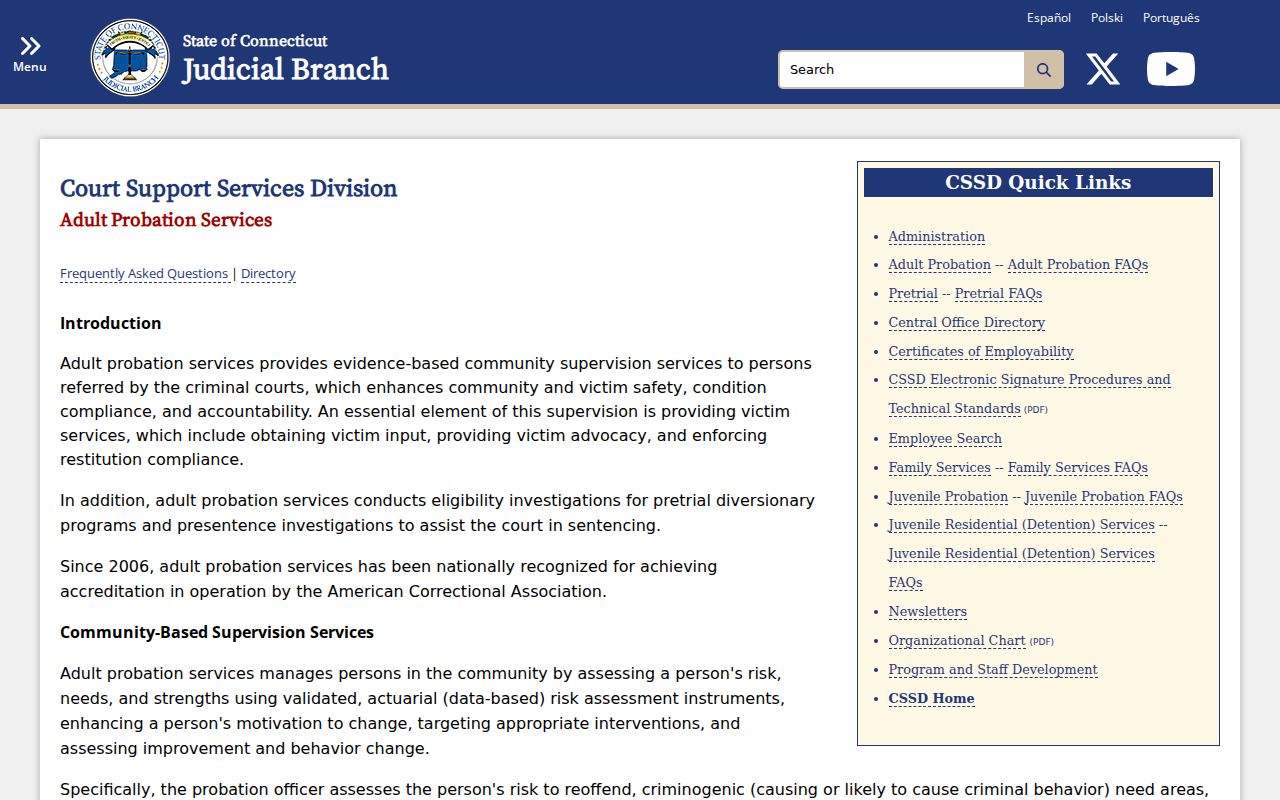
Probation is supervised through the Judicial Branch, while parole decisions and parole services involve separate state authorities.
Connecticut Public Access Laws
Connecticut’s Freedom of Information Act generally supports access to records held by public agencies, but exemptions protect specified information. Criminal-history dissemination laws, court erasure rules, juvenile confidentiality, victim protections, and registry restrictions all affect what can be released. Public does not mean unrestricted, complete, or fit for every purpose. Ask the office that created a record to explain a denial or redaction.
Key Connecticut laws:
CGS §§1-200 to 1-242 establish the Freedom of Information Act and its records framework.
CGS §29-10b governs criminal-history record information held by the state.
CGS §54-142a sets erasure rules for qualifying criminal records.
CGS §§54-251 to 54-255 define registry duties and public treatment.
Juvenile matters, erased cases, active investigative detail, protected victim identities, confidential sources, and some witness material can be unavailable. A requester should narrow the request by incident, date, location, and record type rather than demand every file tied to a name.
New Haven County Warrant Records
The Judicial Branch criminal menu links to a public arrest-warrant search, but it covers only warrants that may lawfully be released. Bench warrants arise from court proceedings and may need confirmation through the clerk handling that docket. Police and court systems may not show the same data at the same moment. A person trying to resolve their own possible warrant should avoid relying on a third-party listing and contact the responsible court or counsel.
Use a docket number when one is known. Save the search date and the court location. Do not assume that “no result” means “no warrant,” because sealed, erased, restricted, newly issued, or otherwise nonpublic material will not behave like a standard public entry.
Do not attempt an arrest. Confirm urgent warrant questions with the issuing court or law enforcement agency.
Restricted, Sealed & Expunged Records
Connecticut generally uses the term “erasure,” not expungement, for the removal of qualifying criminal records from public treatment. Acquittals, dismissals, and certain nolled matters can qualify under CGS §54-142a. Clean Slate expands automatic erasure for eligible convictions under its statutory rules. Juvenile files follow separate confidentiality limits. A missing online entry may thus reflect law, not a broken search.
Erasure also changes downstream duties. Judicial bulk-data recipients must obtain updates and permanently delete erased records before redisclosure. Static copies can become stale as a result. The official Connecticut Clean Slate source shown here explains the statewide program.
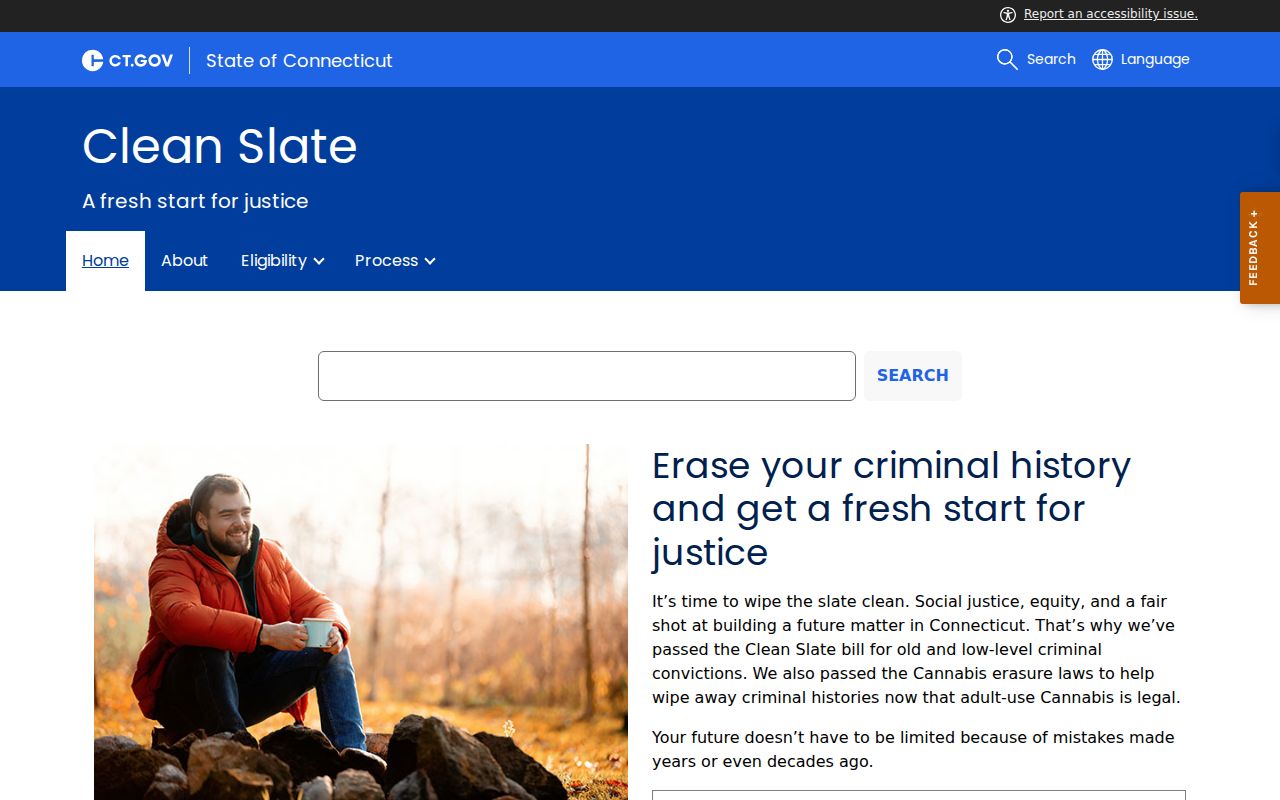
Check current eligibility guidance and the actual court record rather than assuming every old conviction disappears automatically.
A pardon is different from erasure. The Board of Pardons and Paroles handles pardon applications, while the courts and criminal-record custodians apply the legal effect that follows. A person reviewing their own record should keep the docket number and ask the office displaying a stale entry to correct its own system.
New Haven County Supervision Records
Probation and parole are not interchangeable. Adult probation is part of the Judicial Branch’s Court Support Services Division and follows a court sentence. Parole concerns release and supervision after a period of state incarceration. The Board of Pardons and Paroles makes parole decisions, while DOC Community Services performs supervision work. Public detail can be narrower than a court docket or DOC profile.
The Board of Pardons and Paroles source shown here is the official route for parole and pardon information.
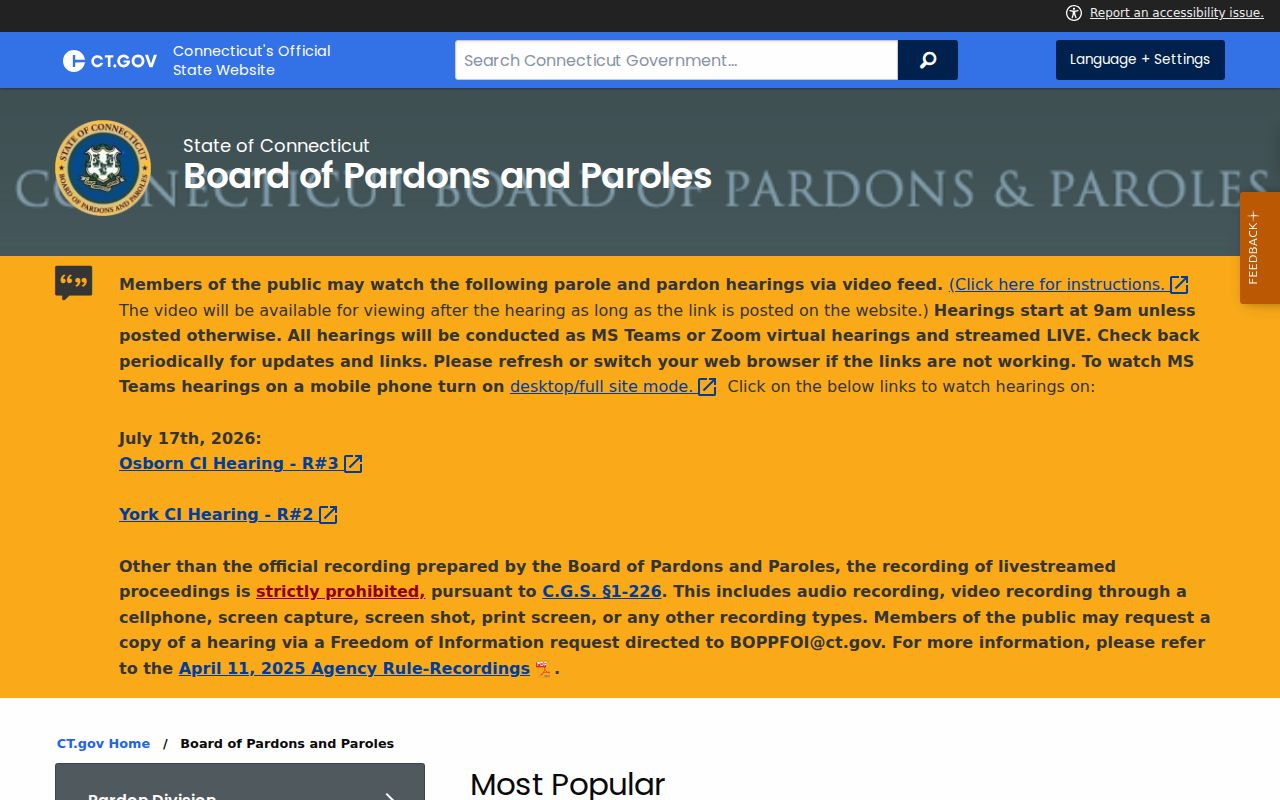
Use the board for decisions and pardon processes, then use the correct supervision office for current reporting questions.
New Haven Adult Probation is at 867 State Street and can be reached at 203-789-7876. New Haven Parole and Community Services is at 620 Grand Avenue, 203-937-2400. These contacts answer different questions, so identify whether the order is probation, parole, or another form of release before calling.
New Haven County Crime Record Context
Crime totals are context, not a person-level criminal-history search. NHPD CompStat, Connecticut reporting, and the FBI Crime Data Explorer can use different periods, offense definitions, and coverage. The 2025 NHPD operational report described year-over-year decreases in several city measures, but murders were 16 compared with 15. Those figures should not be mixed with county labels or treated as court convictions.
The FBI Crime Data Explorer image represents the official national interface.
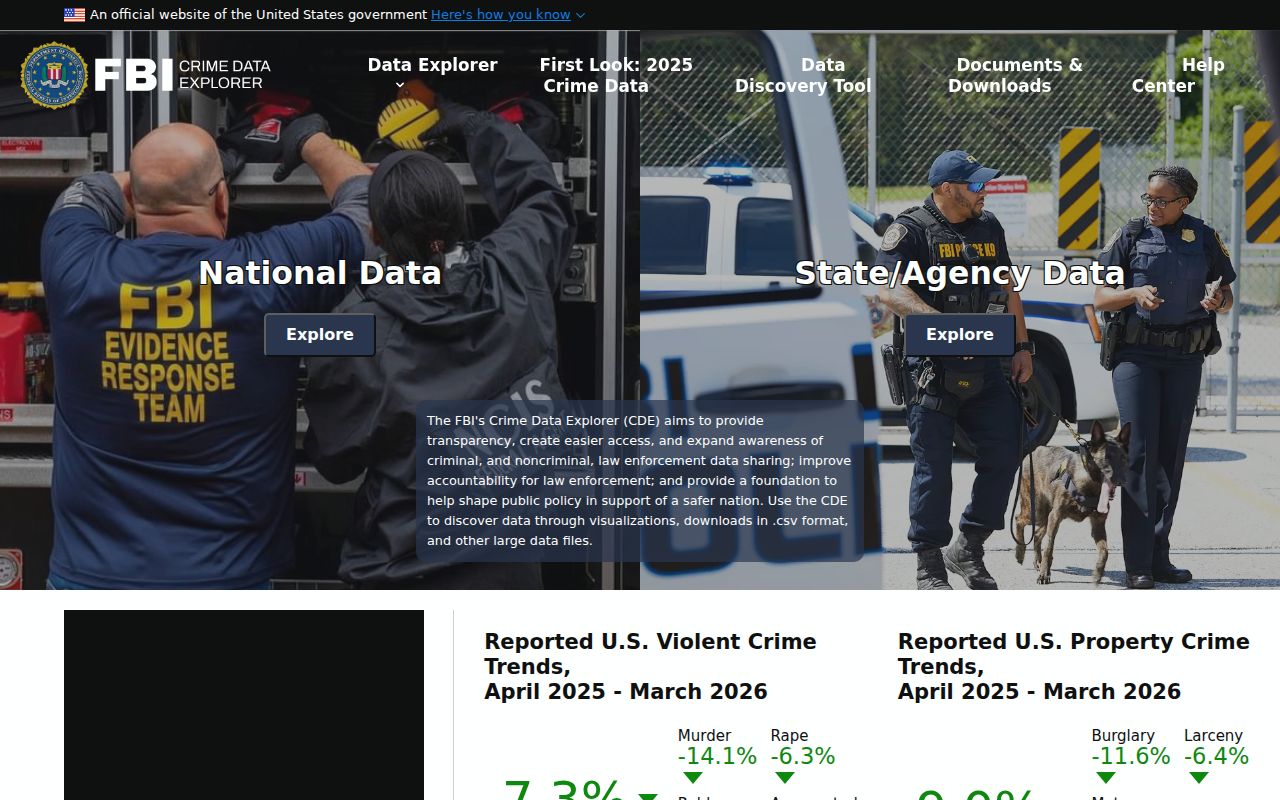
Always record the reporting agency, year, coverage, and metric before comparing New Haven with another place.
City-by-City Criminal Records in New Haven County
City police departments create their own incident and arrest files, while Connecticut Superior Court locations hold the related criminal dockets. New Haven uses NHPD and GA 23, Waterbury uses its police records channel and GA 4, and Meriden pairs its police Records Division with GA 7. None has a municipal criminal court or county jail. Start with the city that created the source record, then trace any filed case through the state court system.
New Haven Record Check
NHPD reports, Police-to-Citizen activity, and GA 23 court records.
Waterbury Record Check
Waterbury Police requests through GovQA and criminal files at GA 4.
Meriden Record Check
Meriden Police Records and GA 7 sit next door on West Main Street.
Resolve Conflicting New Haven Criminal Records
Conflicts often reflect timing or scope. A police file may retain an initial charge that differs from the filed charge. A pending docket may change after disposition. DOC will not serve as a recent booking log, and a repository response may use a different update cycle. Erasure can also require one display to remove a case that remains in an old private copy.
Keep the report and docket numbers, save the date of each search, and ask each custodian to correct its own record. The source police department addresses report facts. The court clerk addresses the docket and certified disposition. SPBI handles repository history. This method is slower than trusting one name result, but it is far more accurate and respects the line between allegation, charge, conviction, custody, and erased information.
The SPBI image points back to the agency responsible for Connecticut repository records.
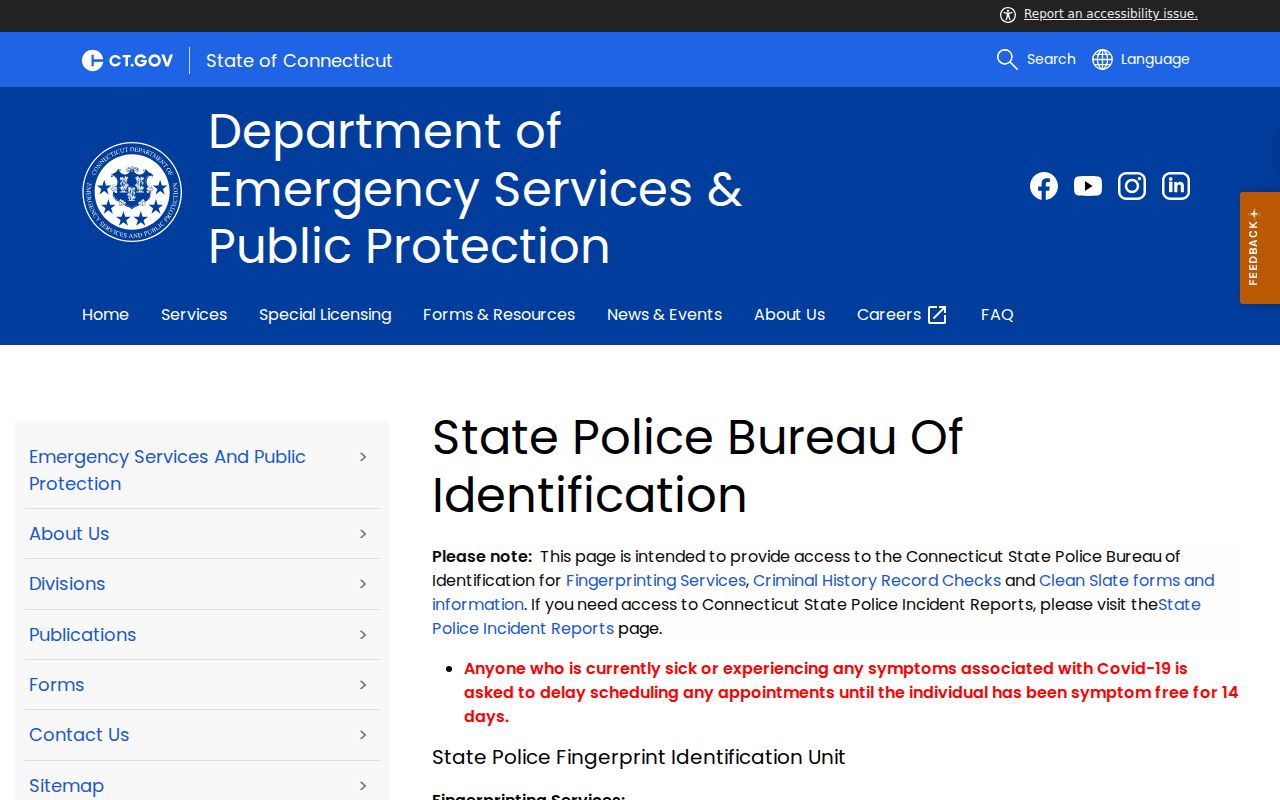
Use SPBI for repository questions, not as a substitute for the clerk’s current court file or the police agency’s narrative.